Picture
Every thing is early this year, so we should not have been surprised when the “burners” called and said they were coming TODAY.  I watched the breeze whipping through the trees and bending the dried stalk of wild grasses, and concluded that this definitely was NOT a good day for the burn.  

We had not even put the notices in the neighbor’s mailboxes so they would not panic when they saw the billowing smoke.  Both of us voiced our concerns but no one listened.  The professional burn crew arrived along with some college students, who were conscripted as extra helpers, in case the fire got away from them.  Not a good sign.  Then I noticed a guy with a red jacket who turned out to be the Township fire chief.  He trusted the burners more than I did.  Nagging in my mind was the controlled burn that got away in Colorado and was still burning.


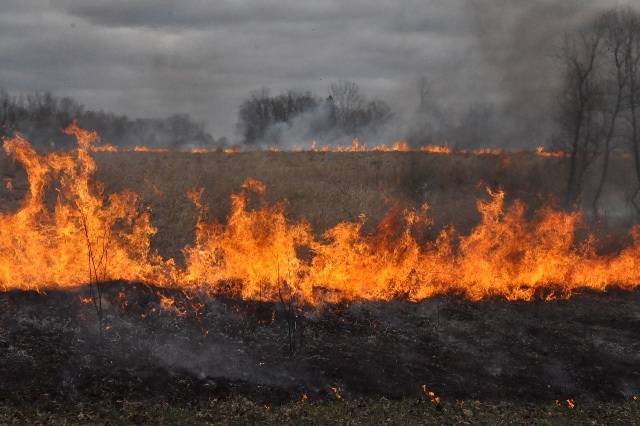
Because of the winds the team did a total back burn.  In other words they went against the wind, because to go with the wind might cause an out-of-control blaze.  The most crucial part was the perimeter—start the fire along all sides of the 8 acres and let it burn to the middle.  The winds were muted on the side near the woods .

The prairie burn was not as spectacular as other years, as generally the flames stayed low to the ground.  But I wanted to take a video so I was right in the middle of the smoke and debris.  At one point a tall dust-devil swirled madly right in front of me, which I captured on my iPhone.  I have not yet learned how to get that video clip on this website so you get just one moving frame. 

Today the air is calm and the vast field is a sea of black ash.  Early spring, high winds and worried residents aside—the job is done.


MY LENTEN CACTUS 02/23/2012
 
Picture
REDEMPTION!
 
 
Picture
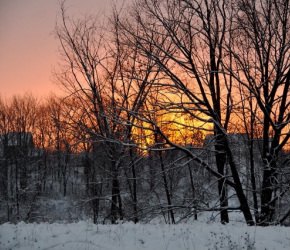
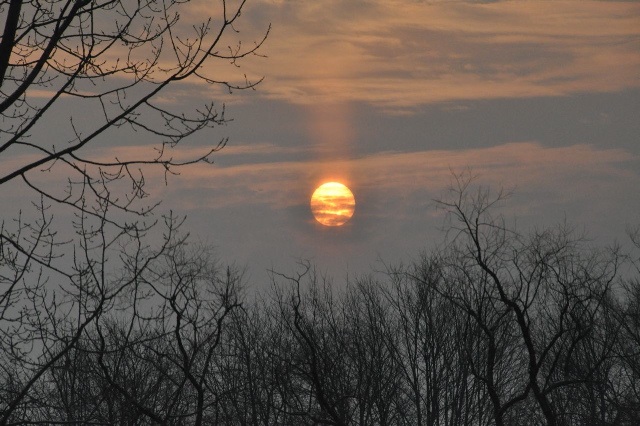
Winter Sunrise
On our Rural Route the mailbox is a long way from the house.  One of my daily pleasures has been to walk the quarter-mile at least once a day to pick up the mail and the newspaper.  Long ago I wrote about the meager fare in my mail box—just catalogs, solicitations for donations, amazing credit card offers and advertisements.  Christmas season is a little better or when someone here is sick and gets well wishes.  But one constant, even on postal holidays, has been the daily newspaper tucked in the holder beneath the box.  I’ve been a paper-reader all my adult life.  When we moved to Michigan I missed the morning paper but adjusted to getting the GR Press mid-day out of the distant box.  Now days before I take that walk for the local paper, I have browsed the New York Times and national highlights on Google where I can even get local headlines. 

But times are changing.  The Press announced an end to daily home delivery, now reduced to three days a week so I’ll have to go on-line for local daily news. Will this end the mostly pleasurable, and certainly good for me, jaunt down the drive every day?  The reward of “stuff” waiting for me—was that just an excuse?  Without that reason will I leave my desk?  The daily ritual has its rewards: seeing, hearing, smelling the natural world throughout the seasons.  A casual glance doesn’t do it, you have to become one with the landscape. 

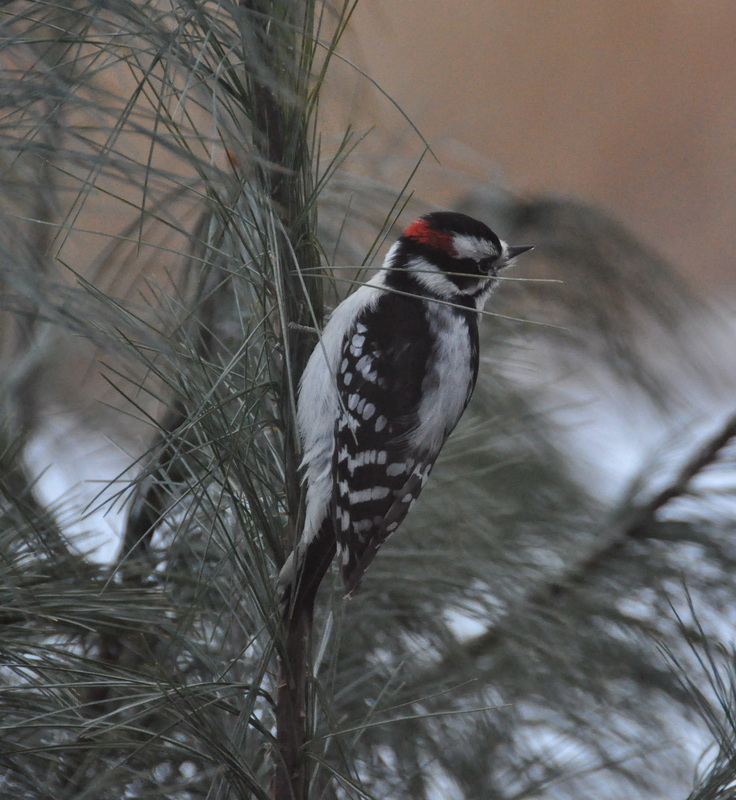
Two days ago I finally got a glimpse of the palliated woodpecker that I have listened to for over a decade.  Today the swan family returned to the lake, foraging on the icy surface.  The tall grasses take on a different hue depending on the time and temperature of day.  Even in winter variation abounds.

So I vow again—neither rain, nor snow nor sleet nor empty mailboxes will keep me from my appointed rounds.  It was never about the stuff.


Picture
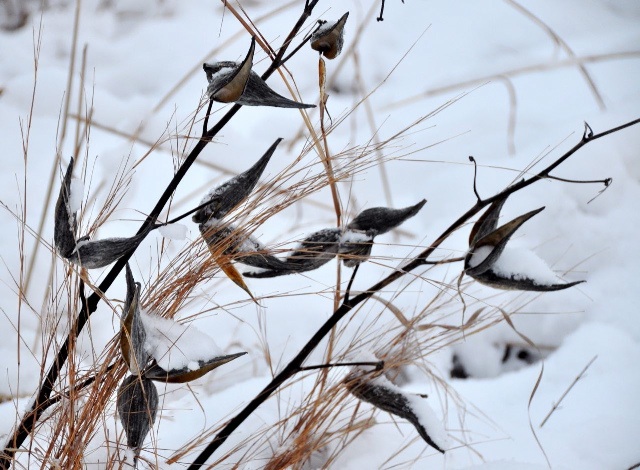
Milkweed Pods and tall grasses


BLOOM OR BE GONE 01/19/2012
 
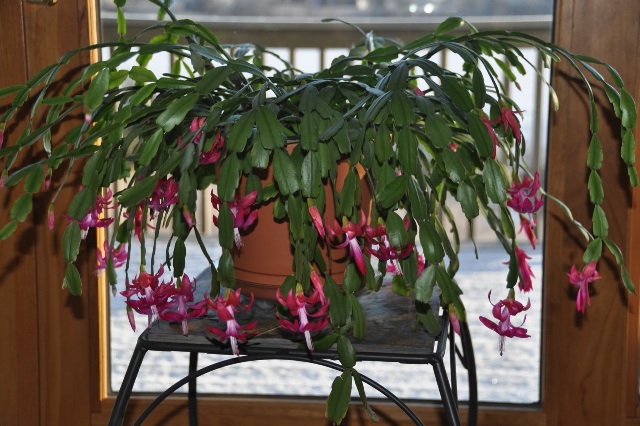
We’ve had a running feud over an indoor plant. “I’m throwing this plant away if it doesn’t do what Christmas cactuses are supposed to do!”  I protested loudly, pointing out all the other plants that we love just for their greenery.  “Don’t you dare—there is a long history in that plant!”
More than fifteen years ago, a dear friend gave us the huge cactus because she could no longer carry it outdoors in the warm weather, which she knew was good for the plant.  We accepted it graciously and followed her instructions even after moving from Ohio to Michigan.  But one summer it fell apart in the flower bed and I thought it was a goner.  Until my sister, an ultimate green thumb stopped by and rescued it.  She patiently took the living stalks, got them to root indoors and then presented them to me for my 69th birthday.  The plant grew and flourished until the woody stalks resembled those of its forbearer.  But nary a bud appeared.
When you can buy a tiny cactus at Lowe’s for under five bucks that is just covered with blooms it is hard to stay loyal to green foliage that refuses to sprout pink flowers from its elegant stalks.  I suggested something I read--put it in a dark place for a while.  He tried that for a couple of days but it only increased his distain for the bloomless plant. We moved it into the bedroom by a window with morning sun--nothing.  I almost begged the hapless plant to “win just one for the Gipper.” The stakes were high: bloom or be gone.
One morning, my husband bellowed from the bedroom, “Come here!”  I hurried thinking the worst. Instead I witnessed a mini-miracle.  One gorgeous dark pink flower.  After four years of waiting, our Christmas cactus finally did what it was supposed to do.  Just in the nick of time. 
 
BLOOM OR BE GONE 12/31/2011
 
Picture
We’ve had a running feud over an indoor plant. “I’m throwing this plant away if it doesn’t do what Christmas cactuses are supposed to do!”  I protested loudly, pointing out all the other plants that we love just for their greenery.  “Don’t you dare—there is a long history in that plant!”
More than fifteen years ago, a dear friend gave us the huge cactus because she could no longer carry it outdoors in the warm weather, which she knew was good for the plant.  We accepted it graciously and followed her instructions even after moving from Ohio to Michigan.  But one summer it fell apart in the flower bed and I thought it was a goner.  Until my sister, an ultimate green thumb stopped by and rescued it.  She patiently took the living stalks, got them to root indoors and then presented them to me for my 69th birthday.  The plant grew and flourished until the woody stalks resembled those of its forbearer.  But nary a bud appeared.
When you can buy a tiny cactus at Lowe’s for under five bucks that is just covered with blooms it is hard to stay loyal to green foliage that refuses to sprout pink flowers from its elegant stalks.  I suggested something I read--put it in a dark place for a while.  He tried that for a couple of days but it only increased his distain for the bloomless plant. We moved it into the bedroom by a window with morning sun--nothing.  I almost begged the hapless plant to “win just one for the Gipper.” The stakes were high: bloom or be gone.
One morning, my husband bellowed from the bedroom, “Come here!”  I hurried thinking the worst. Instead I witnessed a mini-miracle.  One gorgeous dark pink flower.  After four years of waiting, our Christmas cactus finally did what it was supposed to do.  Just in the nick of time. 


Some have said that this was a miserable year.  Certainly misery abounded in historic natural disasters—floods, earthquakes, tsunamis, tornadoes, droughts and hurricanes.  And misery walked alongside hope as Middle East countries revolted against oppressive rule.  Misery erupted in shopping malls, high-speed chases, and killing sprees of deranged gunmen.  We don’t have to look beyond our small circles to experience miseries of lost health, relationships and surety.

But my favorite things in 2011 somehow trump all that misery.  One benefit of blogging is the chance to look back.  “Come what may,” was the phrase I used at the end of 2010.  Now I know all the “what mays” that have come.  I chose to highlight a few of my favorite things:

- seeing the pleasure of a granddaughter as she gave us a made-from-nature, woodpecker ornament for the tree
- enjoying a rare week in the Colorado Mountains with nearly the whole family
- finding a new place to live for one family member
- watching the swan pair nest, raise their young and teach them to fly (their gain, our loss)
- sharing the beauty of wildflowers and tall grasses with eager school kids
- listening to creative word combinations from writers in our extraordinary GR Writer’s Group
- meeting this year’s classes of eager memoir writers
- hearing God’s Good News every Sunday and striving to live it during the week

Here’s to many beautiful “what mays” in the New Year!


Picture
Big Bluestem
Every last day of every month since August when I wrote my last blog entry, I made a vow on my morning walk to write a “state of the prairie” piece.  It never happened—life got in the way.  But this 31st day of October, Halloween for kids and Reformation Day for some Protestants, I will do just that.  I didn’t have to decorate the house or have goodies ready because here out in the country no one comes down the long drive just for a little piece of candy.  There are more fertile grounds.

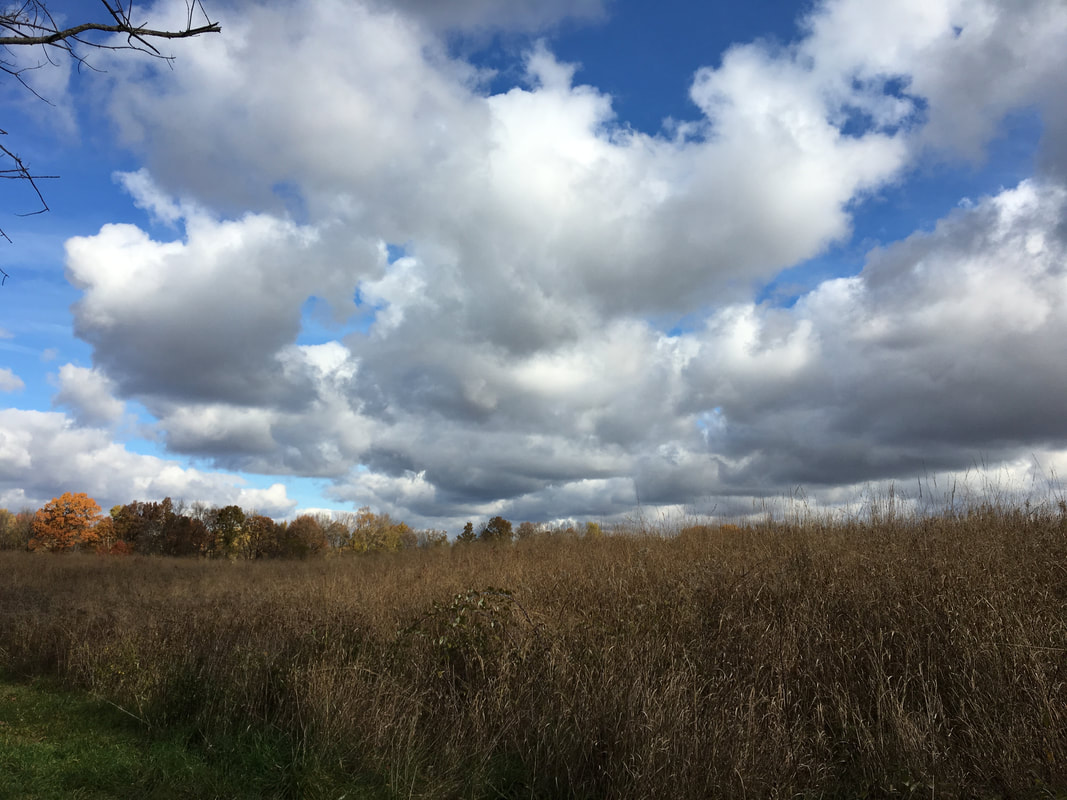
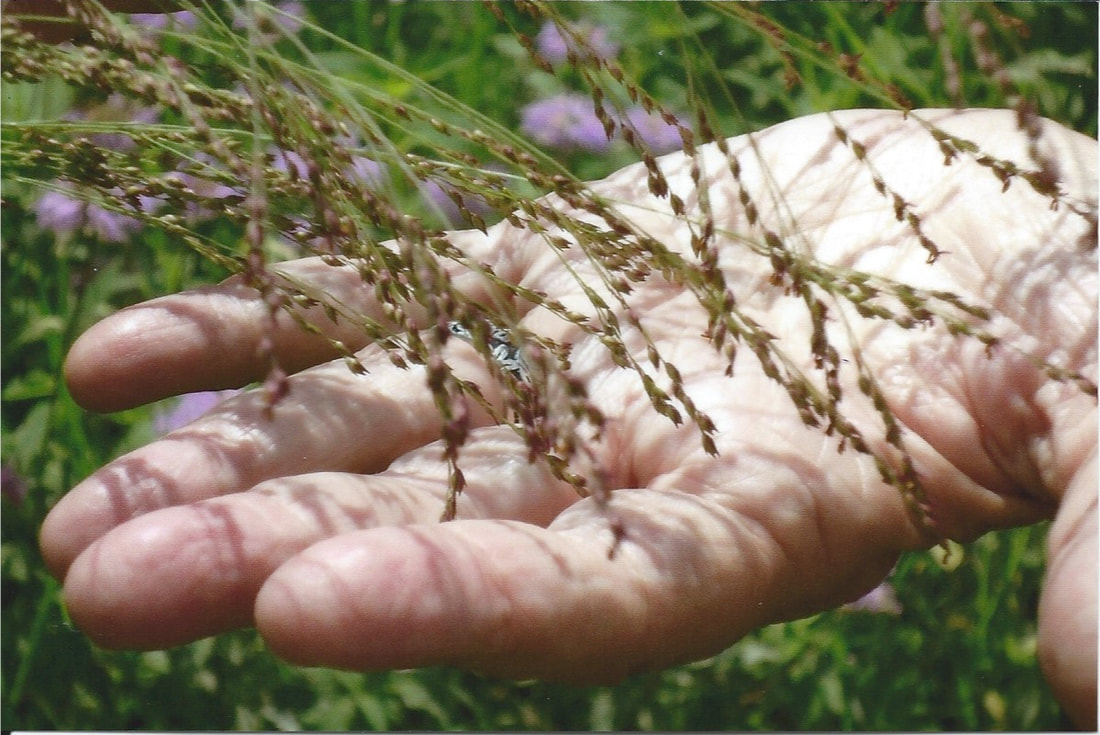
However the earth was intensely fertile this year.  After our late burn during the first week in May, the lakeside of the field came back stronger than ever.  The big bluestem and Indian grass, which have mellowed into golden brown, are taller than our heads and their roots reach even farther beneath the surface.  This week a hard frost accented each stem and shoot in the field, bounded by still colorful trees in the distance.  I especially liked the sparkling switch grass, which is sure to amaze me all winter. 

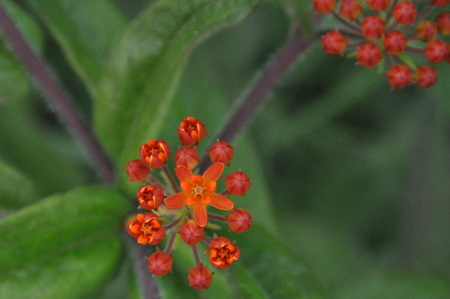
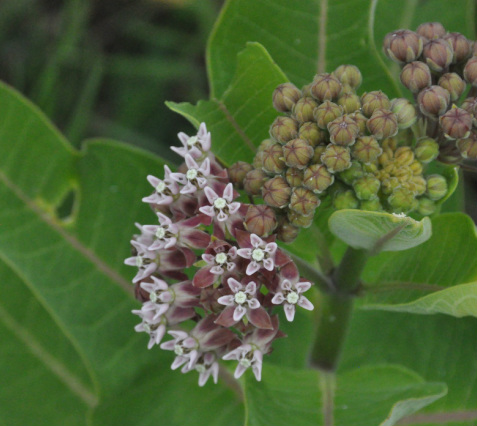
The bright flowers have gone to seed, each in their unique way.  I’m thankful for the milkweed in its many iterations that remain showy all year long.  The fallen leaves in the woods are dry and crunchy, while the monster trees still hold some at their heights.  The abundance of our cultivated garden has been cooked or stored.  We see fewer critters around but they leave their scat on the warm driveway.  Our faithful companions, the swan family, are still with us as they teach the young ones to fly.  We never know when we will hear the last swish of their elegant wings as they leave us for the winter.

The other day, we gave a talk in a series called, “Tending God’s Garden.”  I had to admit to the audienthat mostly God tends us in this prairie garden.  Now, as we face November, the hardest month to love in climates like Michigan we still count on being tended even though death blankets the earth and the promise of resurrection seems like a “pie in the sky” kind of idea.  But new life comes this way—it is part of the plan.  Even the skeletons of plants and the ice on Flat Iron Lake assured us that seedtime and harvest and bluegills will come again!


Picture

The raspberry patch gets lots of attention from me this time of year while I wait impatiently for our late berries to ripen.  Because the garden is in the middle of our fields of wildflowers, new plants like butterfly weed and milkweed often try to establish themselves inside the garden fence.  When I found a thriving colony of purple asters among the berry bushes, I decided they had to go.  They are shallow rooted and easy to pull.  The next day, in the gap where the asters had been, I spotted an amazing spider web, the early morning dew marking each strand of the intricate web.  Next day the web was still there but now occupied by the largest spider I had ever seen.  I ran for the camera but could have taken my time because Ms. Spider stayed in the same place for three days until high winds tore down her delicate scaffolding.  I tried to find out more about this beautiful creature that instilled panic and wonder in me by its sheer size.  So far I know no more than what I can see.  Ironically, I caught a review on NPR of a new book about “Charlotte’s Web,” and its creator, E.B. White.  The host even played parts of the audio version of this classic read by the author, with his charming Eastern accent.  I have not watched spiders in a barn like he did—only in the open.  But like White, I feel the urge to spin a story about this handsome creature, which is now safely housed in iPhoto, where her likeness is frozen in time to inspire me but where her bite cannot harm me .   


Picture
Are these the two that survived?
You know how I worry over the swan babies—a great deal more than about goslings.  Perhaps some of them were also snatched by a snapping turtle; like the one that ate two of the four cygnets.  After their Memorial Day holiday cruse around the lake, the swan family went into hiding for many days.  I could spot some white patches from a distance in their usual habitat but as I got closer the ground sloped making it level with the tail end of Flat Iron Lake, I could not longer see them through the reeds.  I hoped against hope that all the little ones survived.

But finally, they showed them selves again in full view of our windows.  I grabbed the binoculars so as to account for the cygnets.  No matter what angle I viewed, I could see only one bright white one between the parents.  My heart sank.  Three gone, just like that?  Finally I spotted a darker body almost camouflaged by the ripples and shade on the lake.   Two survived—a male and a female.  My disappointment at losing some turned to a celebration that at least two remained.  Convinced that they are big enough now to elude their predators, I rest easy—hoping to enjoy watching the little family for the rest of the season.  They must stay on the lake until the babies learn to fly from their parents, usually late September, which is a sight to behold.

I also spot many places in the yard and along the road where the snapping turtles have laid their eggs.  The eggs are now broken and strewn close to the indented soft earth.  Another kind of predator ate the potential offspring of a predator.  I suppose I should cry over them as well—but today I don’t mind if there are going to be fewer snapping turtles laying in wait for the baby swans.  How do we decide which life is more important?